What is a TMS?
A TMS, in full a transport management system, is software with which a haulage company manages its whole process: from the order that comes in to the invoice that goes out. Here you read what a TMS does, who it is for and what you may expect from it.
A TMS in short
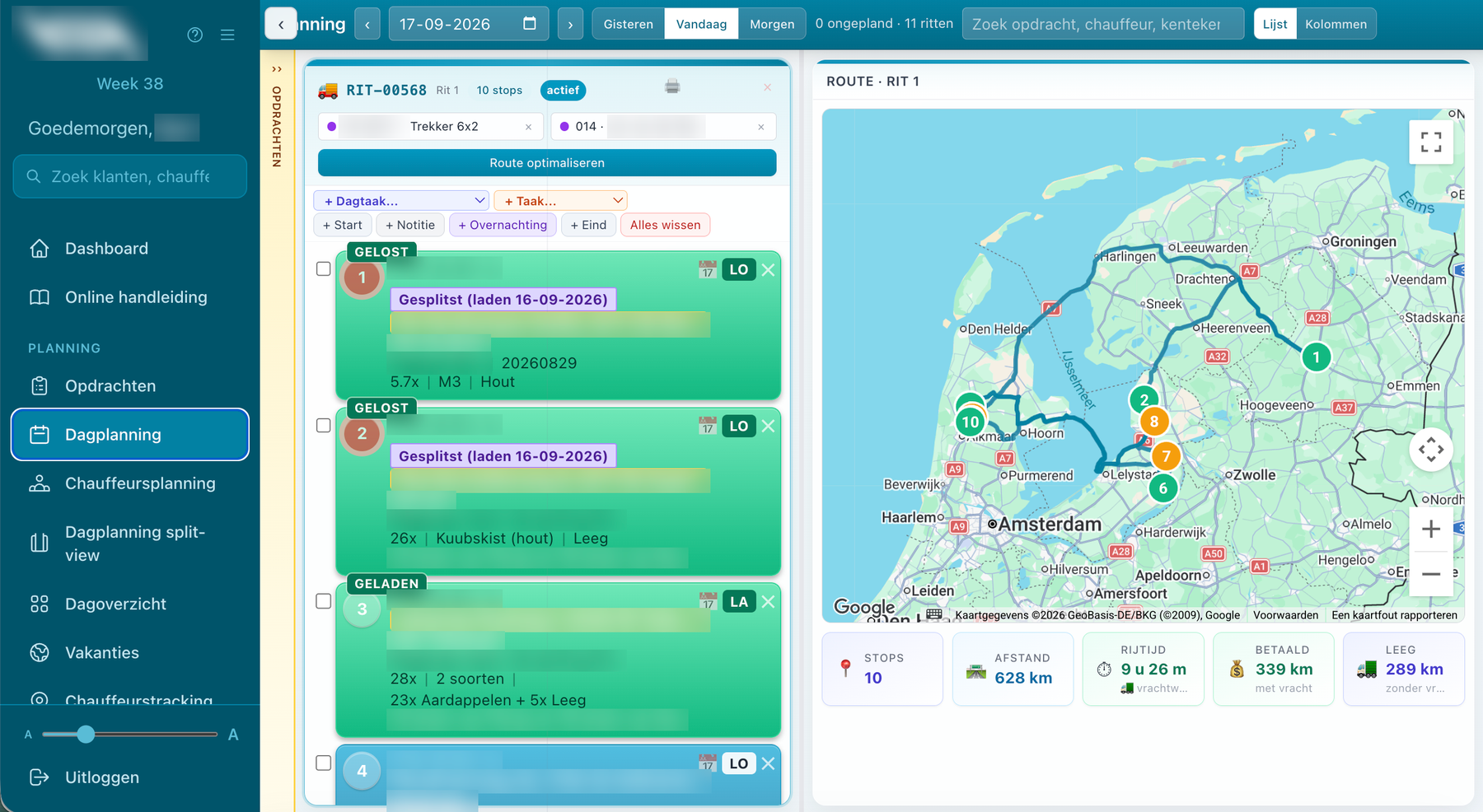
A haulage company does the same round every day: taking orders, making runs, sending drivers out, loading and unloading, having consignment notes signed and after that invoicing and processing the hours. Without a TMS that happens in separate lists, emails, chat conversations and paper.
A TMS records those steps in one system. An order is entered only once and then runs through the planning, the execution and the invoicing, without anyone having to retype it.
What exactly does a TMS do?
- Order management: entering orders with a loading and unloading address, load, date and references.
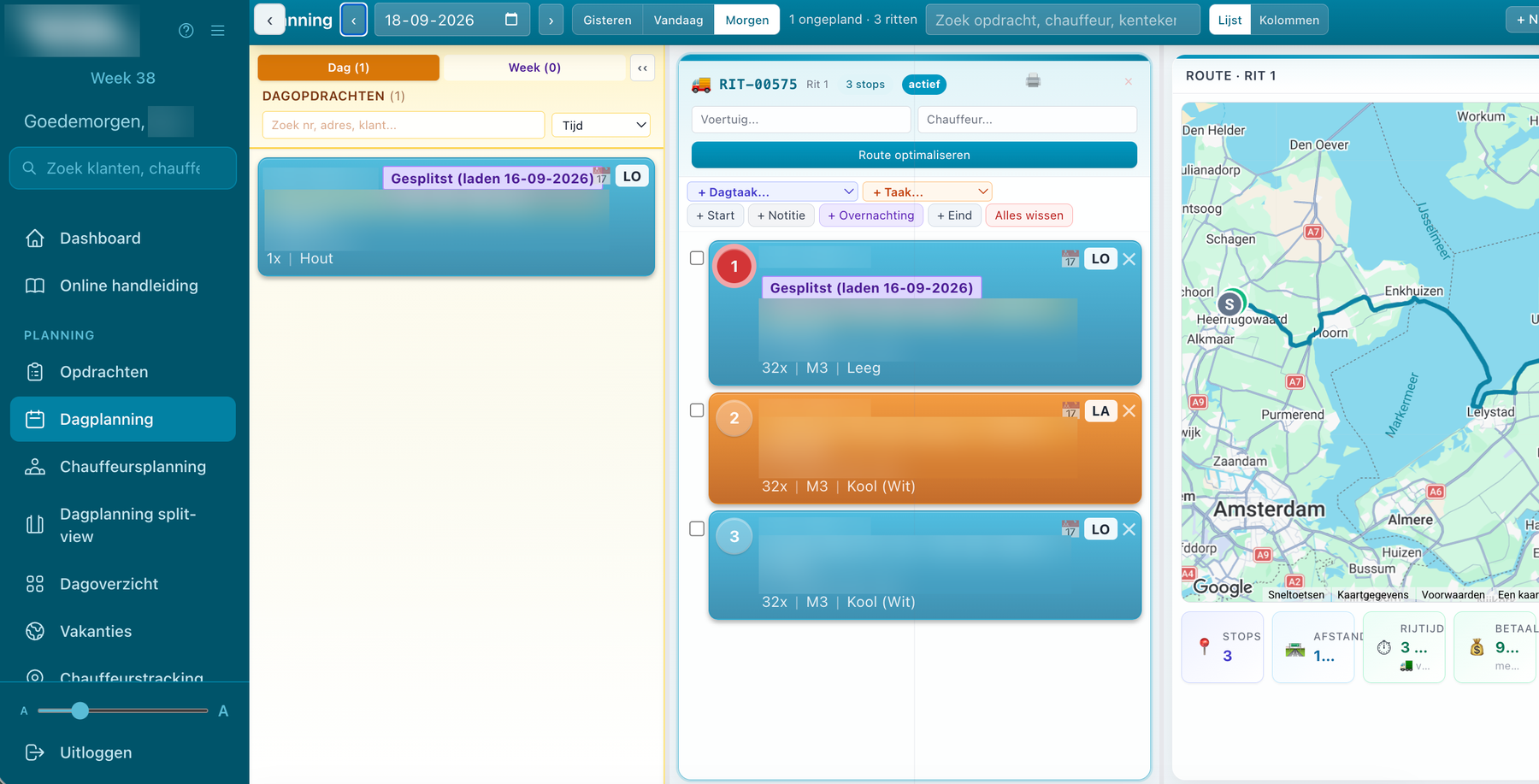
- Planning: dividing orders over runs, vehicles and drivers, and determining the route.
- Communication with drivers: through an app that shows the runs and records the execution.
- Documents: such as the consignment note, signed digitally or scanned.
- Rates and invoicing: working out every run and creating invoices.
- Time recording and pay: recording the driver's working day and getting it ready for the payroll.
- Insight: where the trucks are and how far along every order is.
Why a haulage company uses a TMS
- Less retyping: an order runs through in one go, from entry to invoice.
- Everyone the same information: planners, drivers and customers look at the same thing.
- Invoicing faster and more accurately: based on what was actually driven and loaded.
- Less paper: consignment notes are signed digitally and emailed by themselves.
- Fewer phone calls: changes are with the driver and at the office straight away.
TMS, planning software, FMS or ERP?
Planning software only helps with making the planning. An FMS (fleet management system) is about the vehicle: location, consumption and vehicle data. An ERP is a broad business system for bookkeeping and stock among other things. A TMS focuses on the transport process itself, from order to invoice, and connects to the bookkeeping.
Is a TMS something for a small haulage company as well?
Yes. Especially with a small team it saves a lot if admin and planning do not have to be done twice. A modern TMS works in the browser and in an app on the phone, so you do not need servers or installations. Read more about a TMS for the small haulage company.
How it works in VYS TMS
VYS TMS follows exactly the steps above: orders, planning, the driver app, digital consignment notes, invoicing and time recording. With the particularity that you also plan from the app, and built by developers who come from the haulage world themselves.
Questions about a TMS
What does TMS stand for?
TMS stands for transport management system.
What is the difference between a TMS and an FMS?
An FMS is about the vehicle, such as location and vehicle data. A TMS is about the transport process: orders, planning, execution, documents and invoicing.
Do I need a TMS if I only have a few trucks?
That depends on how much time you now spend on retyping, calling and paper. With a small team that time is often the most valuable.
What does a TMS cost?
That differs per supplier and usually depends on the number of users and the features. For VYS TMS we are happy to discuss it during a demo.
More about VYS TMS
Choosing a TMS
Choosing a new TMS? With this checklist you compare planning, driver app, consignment notes, invoicing, hours, customers, introduction and support.
Transport software
Transport software for small and mid-sized haulage companies: orders, planning, driver app, consignment notes, invoicing and payroll hours in one system.
TMS for the small haulage company
VYS TMS is made for small and mid-sized haulage companies: planning at the office or on the road, self-employed drivers, subcontractors and invoicing without fuss.
See how it works with your own runs?
VYS TMS is built from practice, by developers who come from the haulage world themselves. We are happy to show it, from order to invoice, and to think along about custom work for the way you work.